
Days of the Week in French: Names, Pronunciation, and Usage
The 7 Days of the Week in French
Complete list of days of the week in French
Learning the days of the week in French is a fundamental step for beginners. Knowing them allows you to talk about schedules, plan activities, and communicate effectively with French speakers. Here’s a complete table of the seven weekdays:
|
French Day |
English Translation |
Pronunciation |
|
lundi |
Monday |
/lœ̃.di/ |
|
mardi |
Tuesday |
/maʁ.di/ |
|
mercredi |
Wednesday |
/mɛʁ.kʁə.di/ |
|
jeudi |
Thursday |
/ʒø.di/ |
|
vendredi |
Friday |
/vɑ̃.dʁə.di/ |
|
samedi |
Saturday |
/sa.mdi/ |
|
dimanche |
Sunday |
/di.mɑ̃ʃ/ |
Pronunciation tips for each French weekday
- Lundi: nasal “un” sound, soft ending
- Mardi: stress on first syllable, roll the “r” slightly
- Mercredi: soft “r” sounds, careful with three syllables
- Jeudi: soft “j” at start, like “measure”
- Vendredi: nasal “en” and stress on “di”
- Samedi: clear syllables, “sahm-dee”
- Dimanche: nasal “an” and soft “ch”
How to Use Days of the Week in French Sentences
Talking about plans and schedules
You can use French weekdays to talk about appointments, classes, work, and social plans. Examples:
- Lundi, je vais à l’école. (On Monday, I go to school.)
- Nous avons une réunion mardi. (We have a meeting on Tuesday.)
Using days of the week in French with articles
In French, weekdays are often preceded by the definite article le when speaking of a “routine” : (each monday = le lundi)
- Le lundi, je fais du sport. (On Mondays, I play sports.)
- To indicate multiple days or a range: du lundi au vendredi (from Monday to Friday).
- For special occasions: Le week-end, je me repose. (On weekends, I rest.)
Capitalization Rules for Days of the Week in French
Differences between English and French capitalization
- In English, days of the week are capitalized: Monday, Tuesday…
- In French, weekdays are not capitalized unless they start a sentence: lundi, mardi…
Common beginner mistake
- Forgetting to add le when talking about habitual actions (Le lundi, je travaille)
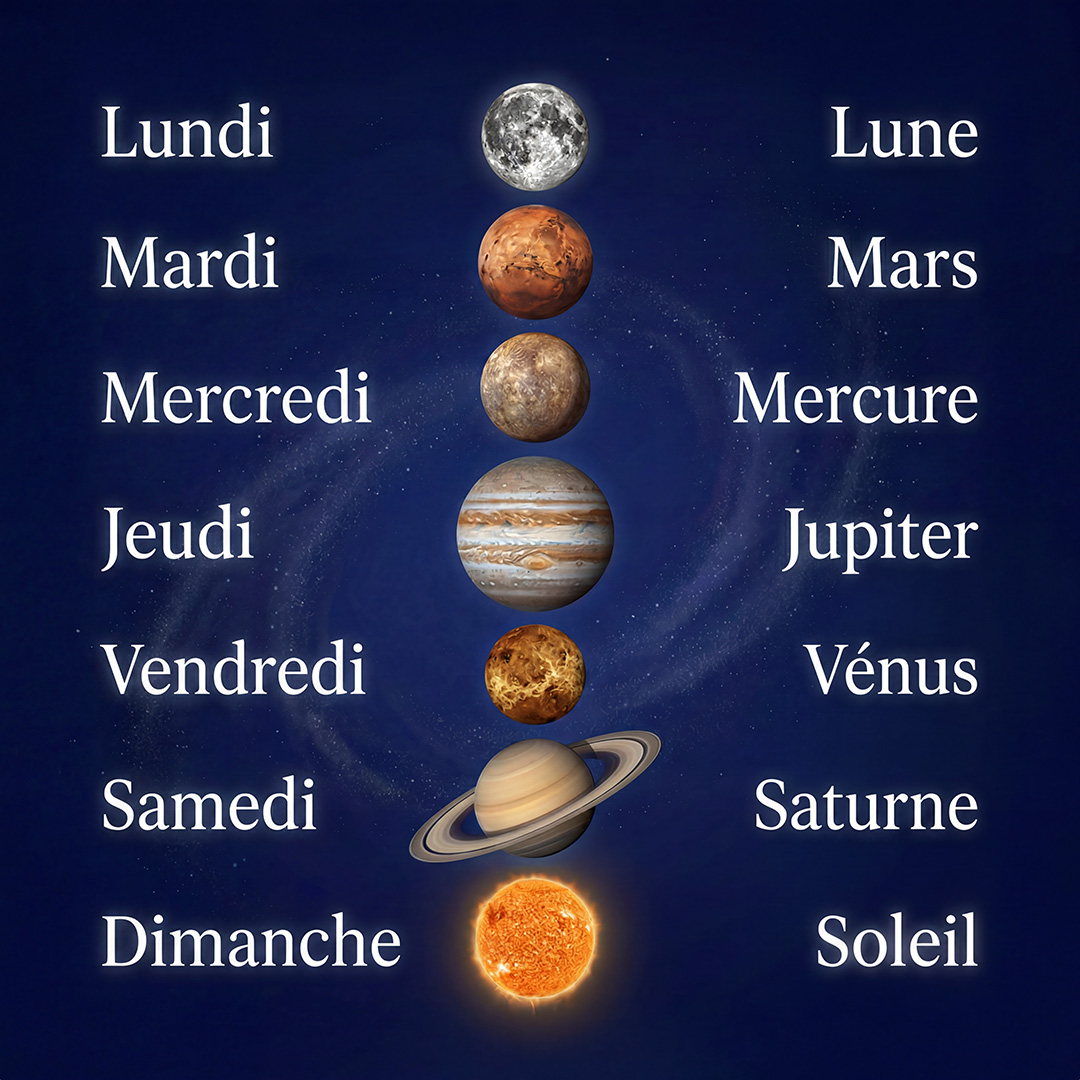
Origins of the Days of the Week in French
Roman and Latin roots of French weekdays
French weekdays come from Latin and Roman traditions:
- Lundi – Moon (Luna)
- Mardi – Mars (god of war)
- Mercredi – Mercury
- Jeudi – Jupiter
- Vendredi – Venus
- Samedi – Sabbath / Saturn
- Dimanche – Lord’s Day (dies dominica)
Cultural and historical background
French weekdays reflect Roman gods, celestial bodies, and Christian tradition, which shows how history and culture shape language. Knowing this also helps learners understand why French weekdays have different names than English ones.
Practice Exercises to Remember the Days of the Week in French
Memory tips for beginners
- Use songs like “Le Lundi au soleil” to memorize weekdays
- Repeat weekdays aloud, practicing pronunciation
- Group weekdays with activities (school, work, social life)
Using French weekdays in daily conversation
- Plan your week in French:
- Quel jour sommes-nous ? (What day is it?)
- Aujourd’hui, c’est mercredi. (Today is Wednesday.)
- Ask friends about schedules:
- On se voit jeudi ? (Shall we meet on Thursday?)
- Dimanche, je vais au marché. (On Sunday, I go to the market.)
Mastering the Days of the Week in French Through Daily Practice
This guide covered everything you need to learn the days of the week in French, including pronunciation, sentence usage, cultural context, and practical tips for beginners. By practicing these words regularly in everyday conversations, learners can build confidence and communicate more naturally with French speakers. For faster progress and real-life practice, many students also benefit from joining french immersion courses or an intensive french course to strengthen their speaking and listening skills.
Oher Articles
- How Long Does It Take to Learn French? – Discover realistic timelines and study tips
- Hello in French – Master essential greetings for everyday conversations
- Basic French Words – Learn essential vocabulary for beginners

 English
  Русский
  Українська
  Deutsch
  Italiano
  Español